Chemical & Physical Peptide Analysis
Peptide Pureness Analysis Service
Irregular fragment size distribution and morphology can influence bioavailability and stability. BOC Sciences is furnished with tools Peptide Purity like DLS, TEM, SEM, and so on, to fully examine nanoparticle dimension, circulation, and check here microstructure. For us, purity isn't just a percentage-- it's a pledge of honesty, uniformity, and respect for the scientific research being done.
Structure & Material
The pureness of peptides is normally examined making use of high-performance liquid chromatography (HPLC). HPLC divides peptides based on their interactions with a fixed phase, enabling impurities and byproducts to be recognized and quantified. In addition, mass spectrometry (MS) can be utilized to verify the peptide's molecular weight and series, providing further verification of pureness by detecting pollutants and destruction products. If you've ever acquired a synthetic peptide for a lab experiment, you have actually most likely saw a pureness percentage on the certificate of evaluation-- typically values like 95%, 98%, and even 99%. Peptide pureness is a crucial top quality metric that informs you what portion of a peptide example is the intended product versus unwanted by-products.
If you've ever before surfed a peptide magazine, you have actually seen pureness numbers all over. These numbers obtain thrown around so frequently that it's simple to play down them-- simply one more specification on a product web page. Chameleon Peptides sells study substances solely for laboratory and analytical functions. All PRG items are planned solely for artificial insemination research study or further production use. Using an extremely detoxified peptide lowers these risks and improves the integrity of your information.
Medical Visual Appeals Product Development
Unlike a maker's in-house screening, independent third-party laboratory recognition is objective and offers honest outcomes, including reputation via objective analytical data. This process is important for keeping high peptide quality due to the fact that the peptide market is mostly uncontrolled in lots of areas, and without recognition some vendors might use unclean, mislabeled, and even counterfeit peptides [3] Making sure that each set goes through correct lab screening assists validate the peptide's credibility and pureness, which is crucial for both study validity and safety and security. Peptide pureness refers to the portion of your sample that is the correct, unabridged peptide sequence, without other peptide-related contaminations. For instance, a purity of 98% shows that 98% of the peptide product is the desired product, while the other 2% might be unwanted residues of synthesis (such as insufficient sequences or amino acid removal variations).To conclude, comprehending peptide pureness levels and qualities assists you make educated decisions for your experiments. A peptide's purity percent tells you just how much of that sample is the actual bargain versus by-products, with usual research study qualities being around 95% as much as 98-99% for extra pureness. Analytical HPLC and MS are your close friends below-- HPLC evaluates purity, and MS validates identification, together guaranteeing you know what's in your tube.
Nanoparticle Physicochemical Building Analysis
- For example, trimmed peptides or chemically modified side-products may bind to targets or create adverse effects that confuse your results.
- We make use of dialysis, ultrafiltration incorporated with HPLC/UV approaches to scientifically evaluate encapsulation performance and drug loading.
- Respectable peptide distributors constantly mark their items this way and offer quality reports with HPLC and MS information to support the pureness level.
- We offer HPLC and UPLC purity analysis operations that concentrate on valuable separation rather than just producing a percent.
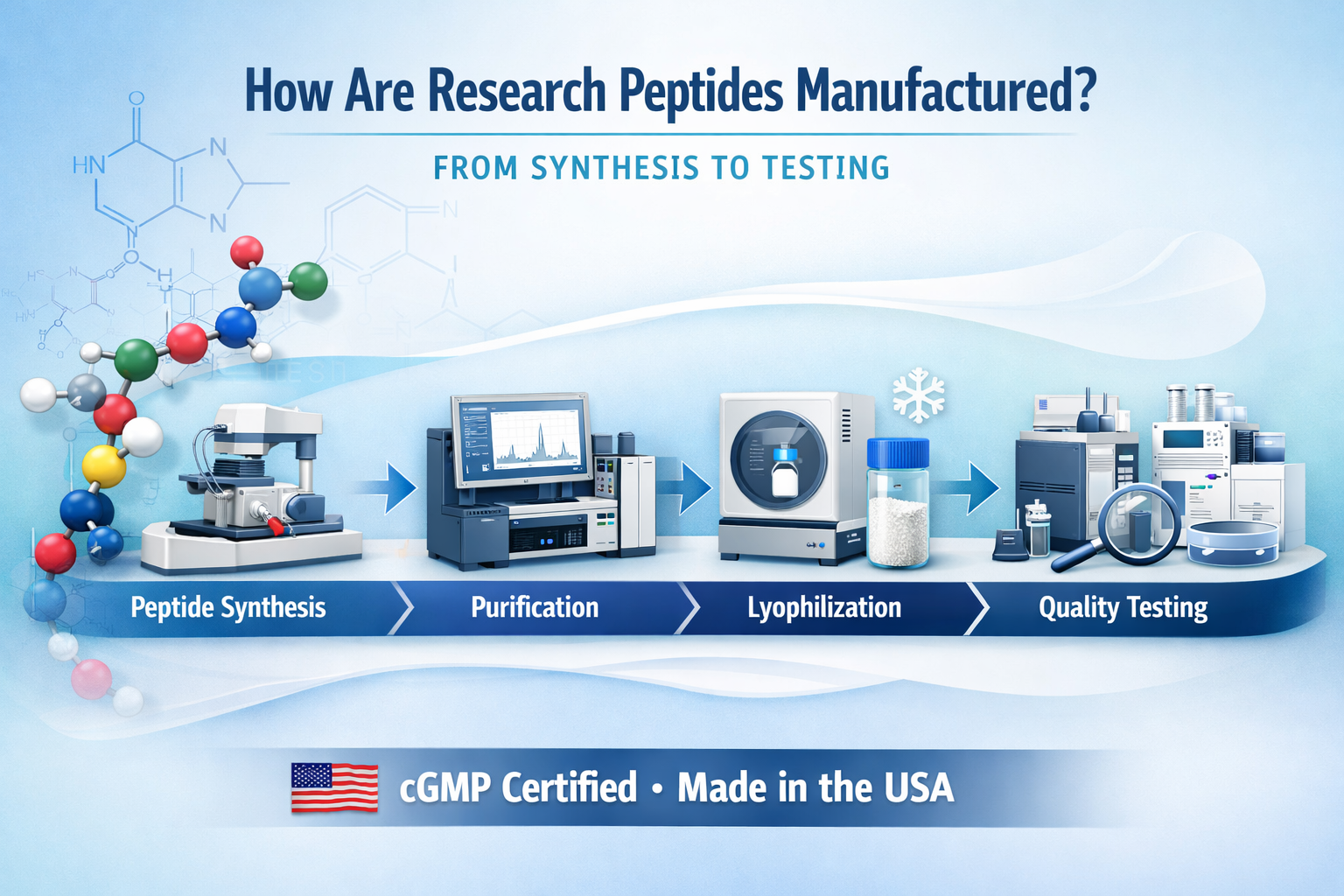
The gold criterion for gauging peptide pureness is high-performance fluid chromatography, universally abbreviated as HPLC. If you see a purity percent on a peptide item, it likely originated from an HPLC analysis. This matters since peptides are developed one amino acid each time through solid-phase peptide synthesis (SPPS). At each action, there's a small opportunity that something goes wrong-- an amino acid doesn't affix, the wrong adjustment takes place, or a side response produces an unplanned byproduct. Over a chain of 10, 20, or 40 amino acids, those tiny per-step error prices compound.
While peptide pureness isn't the only factor, using improperly defined reagents is an identified contributor to irreproducible outcomes. For a 10-residue peptide with 99.5% combining performance, you would certainly anticipate concerning 95% of the end product to be the unabridged series prior to purification. For a 30-residue peptide at the same efficiency, that drops to roughly 86%. This is why much longer peptides are tougher to create at high pureness and typically cost even more. Pureness is the percent of books in the delivery that have every web page published correctly, in the appropriate order, with no missing phases and no additional web pages packed in. A 95% purity means that out of every 100 "publications" in your set, 95 are excellent copies and 5 have some sort of mistake. Maintaining a high level of pureness is crucial because contaminations can impact bioassays or responses. For example, trimmed peptides or chemically customized side-products might bind to targets or produce adverse effects that confound your results. Specially modified peptides or cyclic peptide sequences are challenging to verify, which impacts quality assurance. We incorporate LC-MS/MS and chemical food digestion evaluation to exactly validate the sequence and modification sites of non-natural customized peptides. Residual organic solvents, steel ions, or byproducts from synthesis might trigger hazardous negative effects.